
What Is Business Connectivity Resilience and Why Backup Is Now Standard
Business connectivity has moved from a convenience to critical infrastructure. As cloud services, VoIP, payments, and remote working become essential to day-to-day operations, even short outages can have serious commercial impact. This guide explains what connectivity resilience really means, why backup is now considered standard, and how MSPs and partners should approach resilience without overengineering or unnecessary complexity.
WHOLESALE CONNECTIVITY
12/18/20254 min read


For a long time, business connectivity was treated as a single decision. Choose a broadband service. Install the line. Hope it stays up.
That approach no longer reflects how modern businesses operate. Today, internet access underpins almost everything. Cloud platforms, VoIP, card payments, remote working, security tooling, and customer systems all depend on it being available at all times.
When connectivity fails, it is no longer an inconvenience. It is a business outage. This shift has made connectivity resilience a standard requirement rather than a specialist consideration.
What business connectivity resilience actually means
Connectivity resilience is often misunderstood. It does not automatically mean expensive leased lines, complex networks, or enterprise grade infrastructure everywhere.
At its core, resilience simply means:
Designing connectivity so that a single failure does not stop the business from operating.
That design can take many forms, depending on size, risk tolerance, and operational dependency.
Connectivity resilience is one part of the wider wholesale telecoms landscape that MSPs must understand as they design modern business infrastructure.
Why single points of failure are no longer acceptable
Many UK businesses still rely on a single access circuit. Even when that circuit is full fibre, it remains vulnerable to:
• Local power issues
• Fibre breaks
• Exchange faults
• Planned or unplanned maintenance
• Third party civil works
No network is immune to failure. Even high quality access services such as full fibre can still represent a single point of failure if no secondary connectivity is planned. What has changed is the impact of those outages. A short loss of connectivity can now mean:
• VoIP systems offline
• Card payments failing
• Cloud applications inaccessible
• Remote staff disconnected
• Customer services interrupted
In that context, single line connectivity represents a business risk, not a technical compromise.
Resilience is about design, not overengineering
One of the reasons resilience has historically been avoided is cost.
Many organisations assume resilience means doubling spend or deploying unnecessarily complex solutions. In reality, good resilience design focuses on proportionate risk reduction. That means:
• Understanding what systems depend on connectivity
• Assessing the cost of downtime
• Matching resilience to business impact
• Avoiding unnecessary complexity
Not every business needs the same level of protection, but every business needs some.
The three layers of connectivity resilience
A useful way to think about resilience is in layers.
1. Access resilience
This is about having more than one way to connect.
That might be:
• Multiple access circuits
• Different technologies
• Different delivery paths
The goal is simple. If one access method fails, another is available.
2. Network resilience
Network resilience focuses on what happens beyond the building.
It includes:
• Carrier diversity
• Route diversity
• Exchange independence where possible
This reduces the risk of upstream failures impacting all services at once.
3. Operational resilience
Operational resilience is often overlooked.
It includes:
• Visibility of services
• Clear escalation paths
• Defined responsibility
• Fast response and recovery
A resilient design is only effective if issues are detected quickly and resolved efficiently.
Why resilience is now a commercial expectation
Resilience is no longer driven only by IT teams. It is increasingly influenced by:
• Finance teams concerned about downtime cost
• Operations teams reliant on cloud systems
• Leadership teams focused on continuity
• Customers who expect availability
As a result, resilience is becoming a standard part of connectivity and hosted VoIP conversations, not an upsell. Businesses expect their providers and partners to raise the topic proactively.

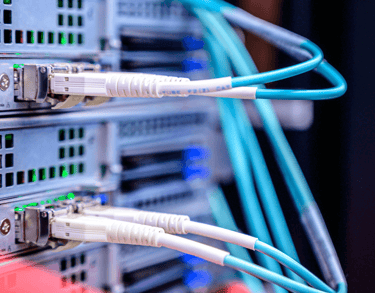


How wholesale connectivity supports resilience by default
Wholesale connectivity models play a critical role in making resilience achievable.
By aggregating multiple networks and access types, wholesale platforms allow partners to:
• Design solutions independent of a single carrier
• Adapt connectivity per location
• Plan for future expansion
• Introduce layered resilience over time
This removes the postcode lottery and single supplier dependency that often blocks sensible resilience planning. Wholesale access makes resilience practical, not theoretical. Wholesale connectivity models allow MSPs to design resilient services without being constrained by a single network or carrier.
Resilience is not about fear, it is about preparedness
The purpose of resilience is not to sell worst case scenarios.
It is to ensure businesses can continue operating when something goes wrong, because eventually something will. Well designed resilience reduces panic, shortens outages, and protects reputation. It turns connectivity from a fragile dependency into a stable foundation.
The bottom line
Business connectivity resilience is no longer optional.
As reliance on cloud, voice, and digital systems continues to grow, single line connectivity represents an unacceptable risk for most organisations.
Resilience does not require overengineering or unnecessary cost.
It requires thoughtful design, flexibility, and the right wholesale foundation.
For MSPs and partners, resilience is an opportunity to lead better conversations, deliver stronger outcomes, and future proof customer environments. MSPs that work with a wholesale partner built for growth can introduce resilience as a natural part of their service strategy.
Backup is no longer a specialist add on.
It is becoming standard.
Are you ready to partner with Bright Edge?
If you are looking for a wholesale partner that is genuinely invested in your growth, Bright Edge offers the experience, support and foundations to help you scale connectivity and voice with confidence.






Unlock additional revenue from both new and existing clients by removing the operational complexity, focus on selling and servicing customers, while maximising margin across connectivity and voice without adding internal overhead.
Company


Bright Edge Networks Limited
Company No. 16393830
Services


Contact
Copyright © Bright Edge Network Ltd 2026