
Connectivity as a Strategic Layer, Not a Utility
Connectivity was once treated as a background utility. Today it underpins cloud platforms, hosted voice, cybersecurity, and day-to-day operations. This article explores why MSPs must reframe connectivity as a strategic infrastructure layer and how design-led thinking improves resilience, control, and long-term customer outcomes.
WHOLESALE HOSTED VOIPWHOLESALE CONNECTIVITY
2/25/20264 min read


For many years, business connectivity was treated as a background service. It was something that needed to be present, reasonably fast, and broadly reliable. Beyond that, it attracted little strategic thought.
That mindset no longer reflects how modern businesses operate.
Today, connectivity underpins cloud platforms, hosted voice systems, cybersecurity tooling, remote access, SaaS applications, and increasingly, core operational processes. When connectivity fails, it is not simply an inconvenience. It interrupts revenue, productivity, and customer experience.
Despite this, broadband and fibre services are still often purchased and discussed as though they are interchangeable utilities.
This disconnect between dependency and design is becoming one of the most significant infrastructure challenges facing MSPs.
The utility mindset is outdated
A utility mindset treats connectivity as a commodity. The conversation centres around speed, price, and contract length. Decisions are often made reactively, particularly when an existing contract approaches renewal.
In this model, connectivity is separate from the rest of the IT environment. It is seen as something that “supports” systems rather than something those systems fundamentally rely on.
The problem is that this separation no longer exists.
When cloud platforms host critical applications, when VoIP replaces traditional telephony, and when remote teams depend on stable access, connectivity is no longer a supporting actor. It is the stage itself.
Treating it as a utility ignores the strategic role it now plays. This is why business connectivity resilience is becoming a standard consideration rather than an optional upgrade.
Connectivity now defines the reliability of everything above it
Modern IT stacks are layered.
At the top sit applications, collaboration tools, and customer-facing systems. Beneath them are cloud environments, security controls, and identity frameworks. At the base is connectivity.
Every layer above is only as reliable as the layer beneath it. When broadband drops, the ripple effect is immediate:
• Cloud-hosted applications become inaccessible
• Hosted voice systems go offline
• Security monitoring loses visibility
• Remote teams disconnect
• Payment systems fail
In this context, connectivity cannot be treated as a commodity purchase. It must be designed as foundational infrastructure. When a single broadband line supports critical systems, it effectively becomes a single point of failure for the entire environment.
Strategic connectivity design starts with dependency mapping
Reframing connectivity as a strategic layer requires a different starting point.
Instead of asking, “What is the fastest service available?” the more important question becomes, “What does this business rely on, and what happens if it stops?”
This shift in questioning leads to more thoughtful design.
It encourages MSPs to assess:
• Business-critical systems
• Acceptable downtime thresholds
• Operational exposure
• Growth plans
• Multi-site considerations
Connectivity then becomes aligned with business risk and commercial reality rather than headline speeds. This form of structured connectivity design avoids overengineering while still aligning infrastructure with business risk.
Network diversity and aggregation support strategic thinking
The evolution of the UK connectivity landscape has made strategic design more achievable. Alongside established infrastructure providers such as Openreach, alternative networks now serve significant portions of the country.
This diversification enables:
• Greater postcode flexibility
• Reduced dependency on single infrastructures
• Improved resilience planning
• Tailored solutions across multi-site estates
Wholesale aggregation plays a critical role here. By providing access to multiple networks through a unified structure, it allows MSPs to focus on design rather than infrastructure constraints.
Strategic connectivity requires flexibility. Aggregation enables it.
Connectivity influences commercial control
Viewing connectivity as a strategic layer also changes the commercial conversation. Reliable wholesale full fibre connectivity forms the foundation of most modern business environments.
When MSPs supply and design connectivity deliberately, they gain:
• Greater influence over infrastructure decisions
• Improved alignment between services
• Reduced supplier fragmentation
• Stronger recurring revenue foundations
• Increased account stickiness
Allowing connectivity to sit outside the managed environment often weakens long-term control.
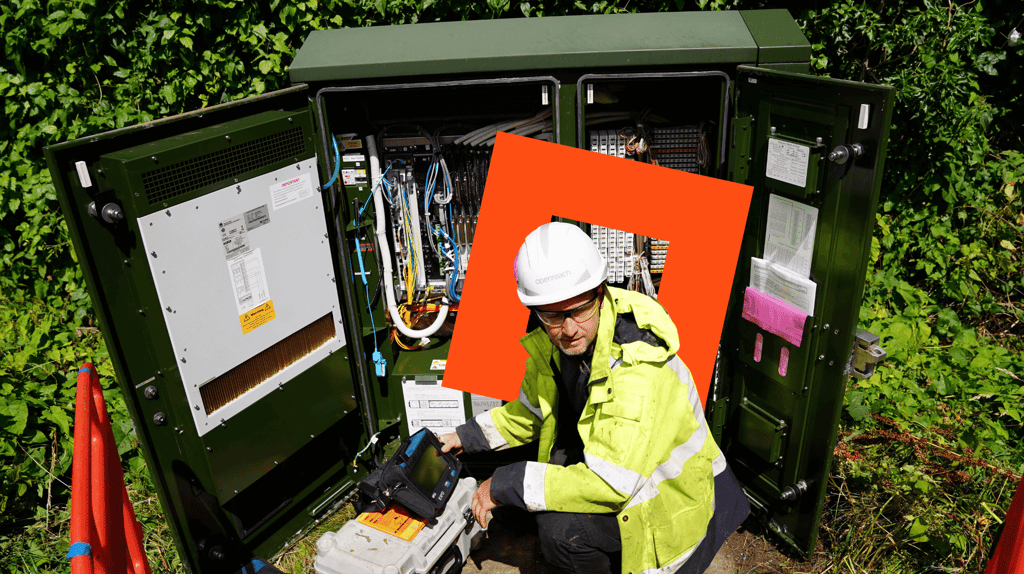
Ownership, in this context, is not about operating networks. It is about guiding infrastructure decisions. MSPs that choose to add connectivity without becoming telecom operators gain greater influence over infrastructure decisions.



The shift from reactive to intentional
Perhaps the most important difference between utility thinking and strategic thinking is intent.
Utility purchases are reactive.
Strategic infrastructure is intentional.
Reactive connectivity decisions often occur at contract renewal or after failure. Strategic connectivity design happens before problems emerge.
MSPs that approach connectivity as infrastructure rather than commodity are better positioned to:
• Protect customer environments
• Introduce resilience proportionately
• Support multi-site growth
• Align connectivity with wider IT strategy
The result is stronger, more stable environments and deeper advisory relationships.
The bottom line
Connectivity has evolved beyond its utility roots.
In modern business environments, it is a foundational layer that determines the stability, performance, and resilience of everything above it.
Treating broadband as a commodity may still feel familiar, but it no longer reflects operational reality.
For MSPs, reframing connectivity as strategic infrastructure is not about complexity or overengineering. It is about aligning design with dependency and recognising that the most important layers are often the ones least visible. MSPs that work with a wholesale partner built for growth can align connectivity with long-term infrastructure strategy rather than treating it as a commodity.
Infrastructure deserves intention. Connectivity is no exception.
Are you ready to partner with Bright Edge?
If you are looking for a wholesale partner that is genuinely invested in your growth, Bright Edge offers the experience, support and foundations to help you scale connectivity and voice with confidence.






Unlock additional revenue from both new and existing clients by removing the operational complexity, focus on selling and servicing customers, while maximising margin across connectivity and voice without adding internal overhead.
Company


Bright Edge Networks Limited
Company No. 16393830
Services


Contact
Copyright © Bright Edge Network Ltd 2026